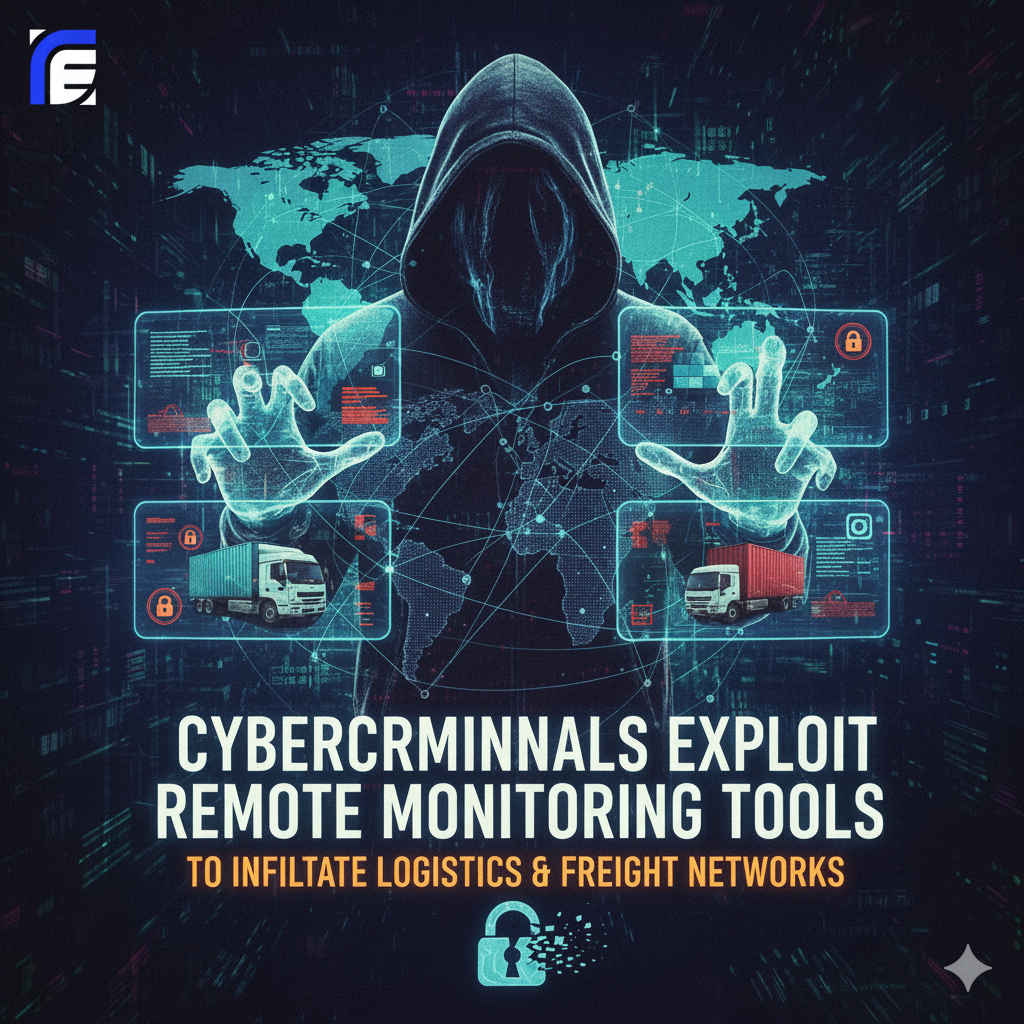
The logistics and freight industry is confronting a new, sophisticated threat vector as cybercriminals evolve their tactics from data theft to facilitating the theft of physical cargo. A recent report reveals a concerning trend: the weaponization of legitimate Remote Monitoring and Management (RMM) tools, such as ScreenConnect, SimpleHelp, and PDQ Connect, to infiltrate freight networks.
This campaign marks a significant shift in criminal objectives, moving beyond digital extortion to directly impacting physical supply chains.
The Attack Vector: From Phishing to Payload
The attack chain is multi-faceted, demonstrating a deep understanding of logistics operations. Attackers primarily gain initial access through highly targeted spear-phishing campaigns, often by hijacking existing email threads to build trust and ensure a high success rate.
Once a foothold is established, the attackers deploy credential harvesting tools to escalate privileges and move laterally within the network. This allows them to gain control of critical systems, most notably, the company's load board accounts. These compromised accounts are then used to post fraudulent freight listings, effectively diverting valuable shipments to locations controlled by the criminal enterprise.
Tangible Targets: The Focus on Food and Beverage
Unlike traditional cyber-attacks focused on data, the end goal of this campaign is tangible theft. The primary targets identified are high-demand physical commodities, particularly food and beverage shipments. Once plundered, this cargo is quickly laundered into illicit markets, sold online, or shipped overseas, representing a direct, quantifiable loss to producers and carriers.
An Urgent Call for IT Governance and Security Leaders
This evolving threat landscape presents a significant challenge for IT Governance and Security leaders, blurring the line between cybersecurity and physical asset protection. The report's findings underscore the urgent need for a multi-pronged defense strategy:
Rigorous Vetting of Remote Access Tools: All RMM software, even legitimate, subscription-based tools, must be treated as potential security risks. This requires stringent vetting, continuous monitoring for anomalous use, and the enforcement of least-privilege access.
Enhanced Email and Endpoint Security: Advanced email security protocols are critical to detect and quarantine sophisticated phishing attempts. Concurrently, robust endpoint monitoring is necessary to identify the deployment of credential harvesting tools post-access.
Proactive Operational Monitoring: Security teams must work closely with operations to monitor load board accounts for any unusual activity, such as listings that deviate from normal routes or partners.
Cross-Functional Threat Intelligence: The most effective defense will stem from breaking down silos. IT, cybersecurity, and physical operations teams must engage in active, cross-functional threat intelligence sharing to correlate digital alerts with real-world operational risks.
This trend demonstrates a critical paradigm shift. For the logistics sector, cybersecurity is no longer solely about protecting information; it is intrinsically linked to the physical security of supply chains, the protection of tangible assets, and the maintenance of industry-wide trust.





Comments (0)